
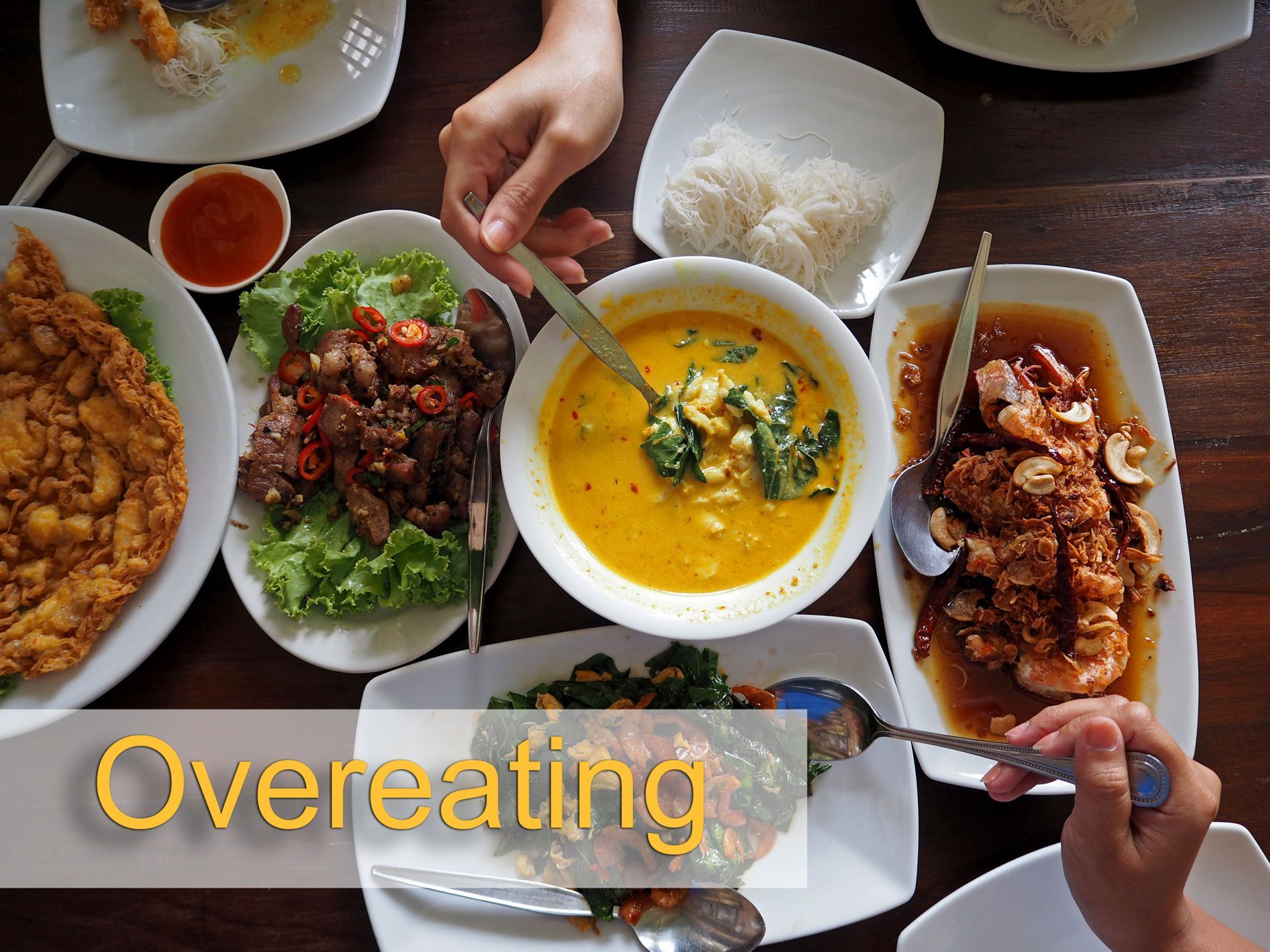
What’s better: eating a big meal of healthy food or having a small amount of “junk” food?
I meet many people who tell me that they really can’t understand why they have health issues or why they can’t lose weight. “But I only eat healthy food!” they say.
When I ask people what they think is better—eating a huge meal made out of very healthy food (and I mean eating until they are so full that they can’t take another small bite!) or eating a small piece of not-so-healthy candy—most of them say that a huge healthy meal is healthier and better for us.
Truth to be said: they are wrong! If we have to choose between the two, the small candy is actually better.
And why is that?
Imagine a laundry machine that you fill up until it has no space left. How will your laundry come out? The water and detergent will have a hard time getting to every part of the clothing and cleaning it well. On the other hand, if you only put a few clothes in the laundry machine, they will probably come out very clean, as the water and detergent can get everywhere easily.
Same with our stomach: the more we load it, even with the healthiest food, the longer it will take to digest everything, and there is a chance that not all of the food will be digested properly.
Quantities play a huge role in keeping our body healthy and in balance. The sages always say that it’s better to stop eating before you feel completely full. Try to stop eating when you still feel that you could eat some more, and not when you can’t have another bite.
Is it easy? Oh no, it’s not! Especially when you are having dinner with friends and everyone is sitting around the table, talking and eating non-stop. It’s not easy even when you are by yourself! It’s just never easy—but it’s a habit you can develop. And you may “fall” here and there, but it’s not really falling; it’s simply part of the process you are going through—the process of healing your body and keeping it healthy!
Overeating is one of the main causes of disease in the Western world. Our health is always set by the balance between the toxins we take in and the toxins we let out of our body.
For example, a young person’s body is efficient enough to process food faster and better, and release unnecessary toxins; this person may be healthy even if they don’t eat the best food. On the other hand, an older person, with a weak and slow digestive system, will have trouble getting rid of toxins and will get sick easily.
I’m not saying here that young people can now eat whatever they like and still be healthy! Unfortunately, I see too many young people who are sick these days, as a result of the poor quality of food, water, air, and the high stress levels we all live with.
This was just an example to help you understand that our health is set by the balance of what goes in and what goes out of our body. And therefore, when we eat too much food (of any kind), especially at an older age, we tend to accumulate many more toxins inside our digestive tract (and overall in our body).
So how can we stop overeating?
There are a few tips and tricks that will help you along the way, so no worries!
- Please remember that eating less becomes a habit if we practice it long enough!
Our stomach is a muscle that can become bigger or smaller according to the amount of food we usually eat. So once you start eating less, you actually make your stomach smaller. After your stomach becomes smaller, you will get full faster and feel good with less food. - Fill up your plate first and ONLY eat what’s on it. No second rounds!
- Use smaller plates and even smaller cutlery.
- I use chopsticks for some of my food, especially salads. When you use chopsticks, your bites are naturally smaller and it takes longer to finish your food, which makes you feel full faster.
- When you are eating with friends and you are done eating, but there is still food on the table and you feel like eating more than you need, simply take a used napkin and put it on your plate (you can even put your leftovers on it so your plate is now “dirty”).
- Write a food journal: what you ate, how much, and when. Make sure to write down how you felt after eating—were you tired or full of energy? A food journal is a great help in the process of getting healthy. You can also use Cronometer or any other app that helps you check your food’s nutritional value and make sure you are getting whatever you need, even without overeating.
- Have coffee! Drinking high-quality coffee (about 1–2 cups a day) can help you fight overeating.